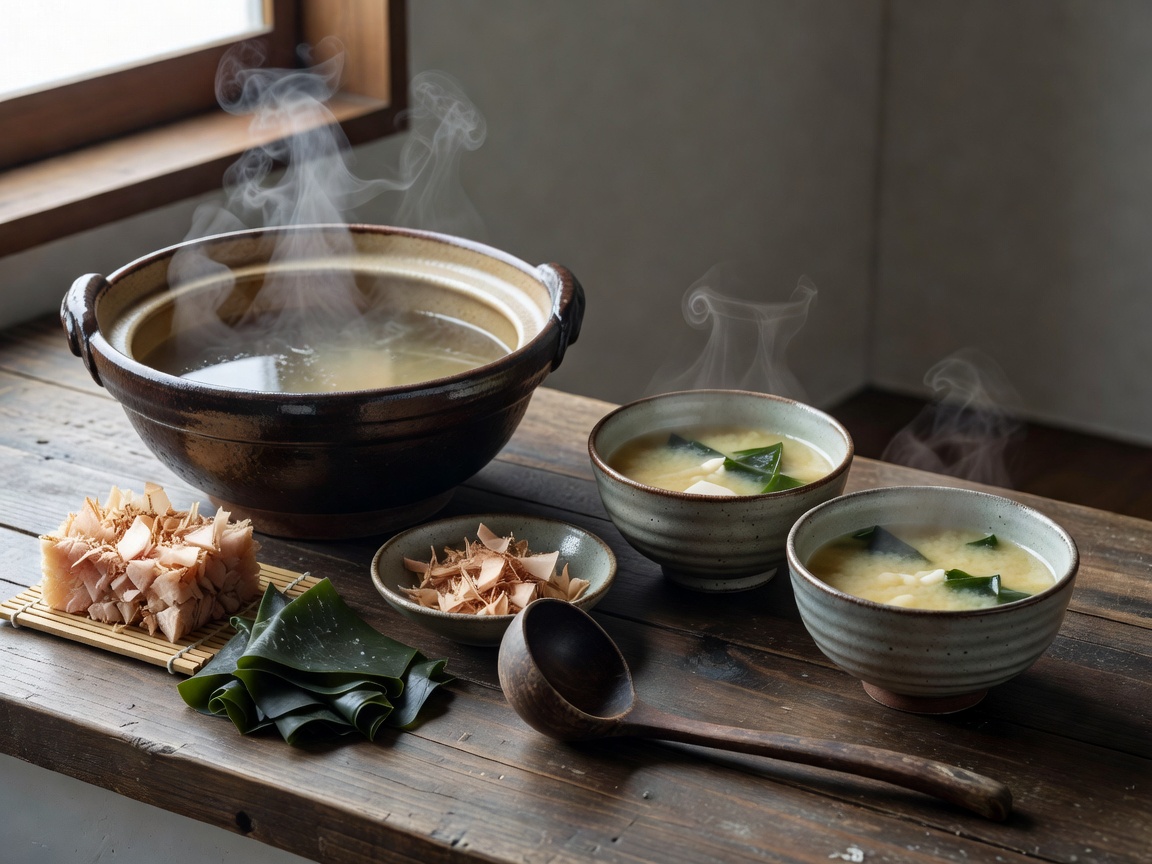
The Genesis of Mindful Consumption
In the quiet mist of early morning at Eihei-ji—the head temple of Sōtō Zen Buddhism founded by Master Dōgen in 1244—the day does not begin with hurried speech or rushed calories. It begins with Dōgen's Tenzo Kyōkun ("Instructions for the Zen Cook"), a seminal text arguing that the preparation and mindful eating of morning food is indistinguishable from enlightenment itself.
"When you prepare food, never view the ingredients with ordinary eyes. Handle a single leaf of green with the same reverence you would afford the body of the Buddha." — Master Dōgen, 1237 CE.
From this strict monastic dietary doctrine (Shōjin Ryōri) emerged the structural framework that still governs the Japanese breakfast table today: Ichiju Sansai (一汁三菜), literally translated as "one soup, three dishes," supported by a foundational bowl of rice and lacto-fermented pickles (tsukemono).
The Five Pillars of Harmony (Gomi, Goshiki, Gohō)
Zen culinary philosophy dictates that a balanced morning meal must satisfy three simultaneous mathematical alignments to awaken bodily organs without causing metabolic shock:
- The Five Colors (Goshiki - 五色): Every morning tray must feature Red (salmon, umeboshi), Yellow (tamagoyaki, ginger), Green (scallions, wakame, nori), Black/Dark (kombu, natto, sesame), and White (steamed koshihikari rice, silken tofu).
- The Five Tastes (Gomi - 五味): Sweetness, sourness, saltiness, bitterness, and the profound depth of umami derived from naturally glutamic kelp (kombu).
- The Five Preparation Methods (Gohō - 五法): Raw, simmered, grilled, steamed, and fermented elements working in physiological synchronization.
⛩️ Spatial Semiotics of the Morning Tray
The positioning of dishes on the lacquer tray is not aesthetic coincidence. Steamed rice is positioned on the bottom-left because in ancient Shinto and court etiquette, the left represents the sacred sunrise and primal life force. Miso soup rests on the bottom-right, allowing the right hand to comfortably lift the bowl without crossing the sacred staple grain.
The Transition from Cloister to Kitchen
During the Edo period (1603–1867), as urban merchant classes flourished in Edo (modern Tokyo) and Osaka, samurai families and domestic households adapted the rigorous Zen meal into the accessible morning ritual known today. Shiozake (salted salmon) replaced temple tofu as coastal cold-chain transport improved via wooden transport vessels (Kitamaebune), while fermented natto spread across northern agricultural plains as a winter protein staple.
Modern Metabolic Lessons
Contemporary clinical nutrition validates what Kamakura monks intuited eight centuries ago: the combination of low-glycemic short-grain starches, active probiotic bacteria in raw natto and miso, ocean minerals in wakame, and clean omega-3 fats prevents morning insulin spikes, sustaining cognitive clarity throughout the working day.