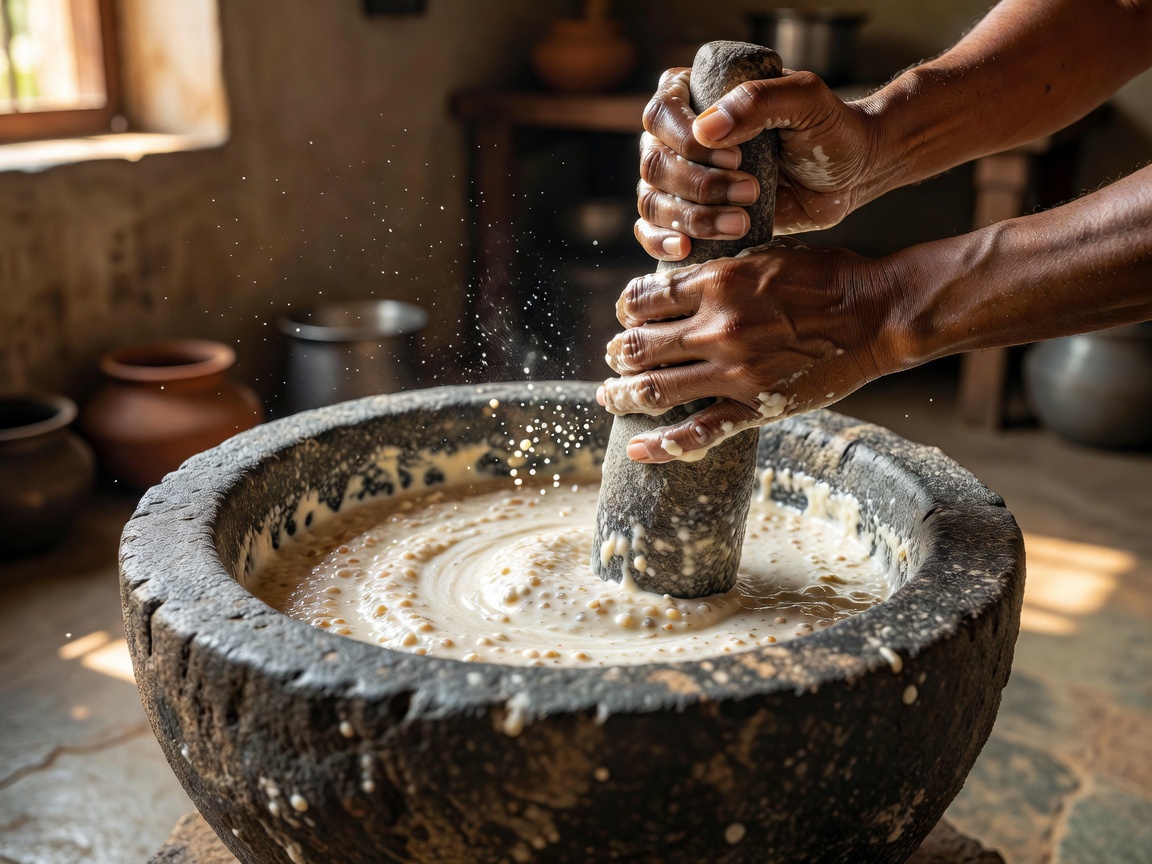
The Microbial Magic in the Stone Mortar
Across the southern states of Tamil Nadu, Karnataka, Andhra Pradesh, and Kerala, the alchemy of breakfast begins the evening before. Long before modern microbiology identified single-celled organisms, Indian home cooks mastered one of history's most sophisticated wild fermentation protocols: turning raw black gram (Vigna mungo) and short-grain rice into leavened, gut-healing delicacies without commercial yeast, baking soda, or chemical additives.
"In the 10th-century Kannada text 'Vaddaradhane' by Shivakotiacharya, idli is described as 'iddalige', prepared by steeping fine urad dal in spiced curd water and steaming it to celestial lightness." — Classical Kannada Inscriptions.
Unlike sourdough or beer fermentations which rely primarily on yeast strains, South Indian tiffin batter is driven predominantly by heterofermentative lactic acid bacteria, primarily Leuconostoc mesenteroides, along with Enterococcus faecalis and wild airborne yeasts (Saccharomyces cerevisiae).
The Two-Stage Biochemical Transformation
The fermentation kinetics follow a delicate symbiotic curve:
- Phase 1: Gas Production (Aeration): During the first 6–8 hours at ambient tropical temperatures (28°C–32°C), Leuconostoc mesenteroides proliferates rapidly, metabolizing the mucilage sugars of the soaked urad dal. It generates carbon dioxide (CO2), causing the batter to double in volume and form millions of micro-bubbles.
- Phase 2: Acidification (Flavor & Preservation): As the pH drops from 6.0 to approximately 4.5, Streptococcus faecalis and Pediococcus cerevisiae take over, producing lactic acid that imparts the signature pleasant tangy aroma while creating an inhospitable barrier against pathogenic bacterial spoilage.
🧪 The Nutritional Leap of Legume Fermentation
Controlled clinical trials reveal that the 14-hour fermentation of idli batter increases bioavailable Vitamin B12 by up to 60%, boosts riboflavin and thiamine levels, and breaks down 90% of phytates (anti-nutrients), unlocking iron, calcium, and zinc for effortless intestinal absorption.
Ayurvedic Physiology & Morning Agni
In Ayurvedic medicine, the morning digestive capacity—known as Jatharagni (the internal digestive fire)—is considered delicate upon waking. Consuming heavy, oil-saturated foods or raw, cold items dampens this flame. Steamed idlis, being naturally warm, fermented, and virtually fat-free, kindle Agni gently without causing sluggishness (Tamas).
Tempering (Tadka): The Bioavailability Catalyst
The accompanying dishes—sambar and chutneys—are completed with tadka (blooming black mustard seeds, asafoetida, dried chilis, and curry leaves in hot coconut oil or ghee). This high-heat extraction of fat-soluble polyphenols and volatile sulfur compounds acts as a carminative digestive aid, ensuring maximum nutrient uptake and complete satiety.