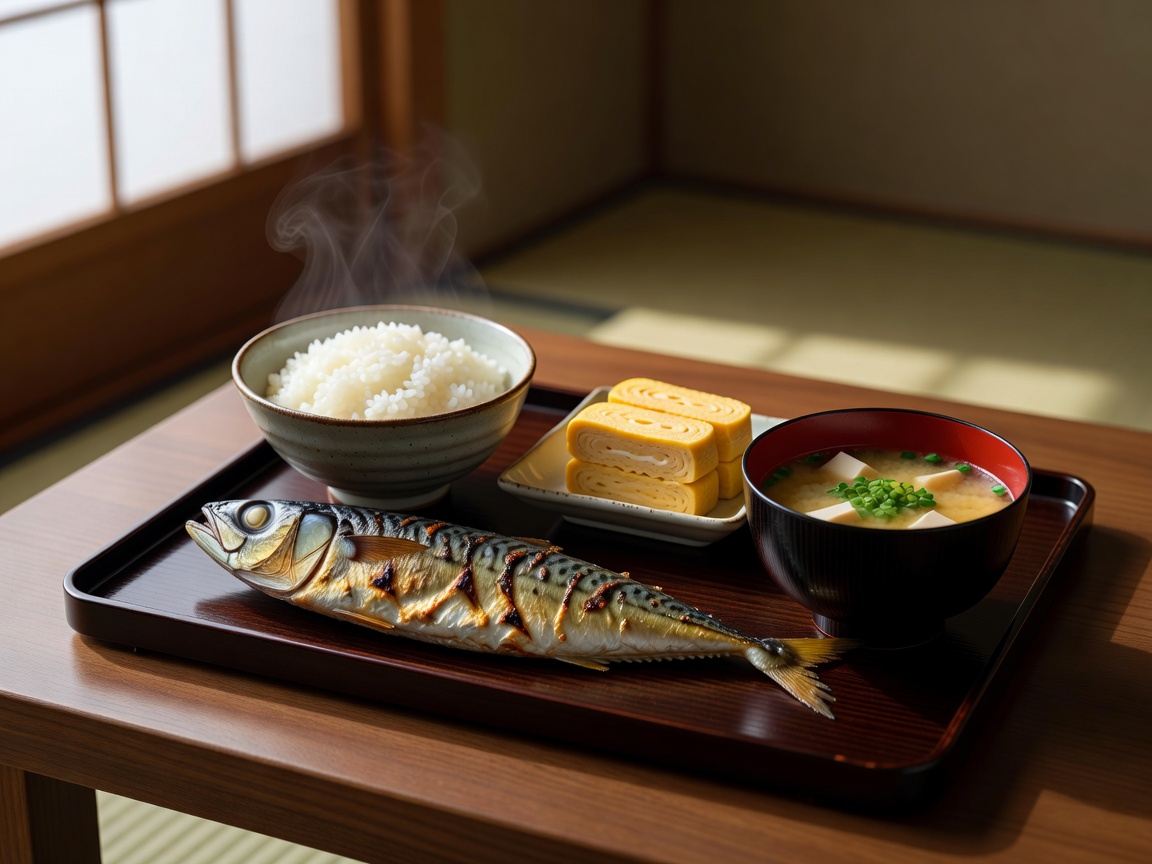
The Philosophy of 'Ichiju Sansai' (一汁三菜)
In Japan, breakfast is not conceived as a sugary rush or a hurried handheld snack, but as an intentional grounding ceremony. The structural architecture of Asagohan (朝ご飯) is rooted in Ichiju Sansai—translating directly to "one soup, three dishes" plus a foundational bowl of steamed Japanese short-grain rice (gohan) and seasonal pickles (tsukemono).
This layout originated in ancient Zen monastery temple diets (shōjin ryōri) and imperial banquets, later evolving during the Edo period into the quintessential morning meal that fuels millions of households and ryokan guests today.
Core Elements of the Traditional Spread
1. Gohan (Steamed Koshihikari Rice)
Gohan is the indisputable center of gravity. Japanese short-grain rice possesses a distinct natural starchiness, subtle sweetness, and delicate stickiness. It is served steaming hot in a ceramic bowl placed traditionally on the diner's bottom-left side.
2. O-Miso Shiru (Dashi-Enriched Miso Soup)
Anchoring the bottom-right of the lacquer tray, authentic miso soup relies on a foundational awase dashi broth brewed from kombu (dried kelp) and katsuobushi (shaved bonito flakes). Into this simmering broth, fermented soybean paste (miso) is whisked right before serving with silken tofu, rehydrated wakame, and finely sliced scallions.
3. Shiozake (Salt-Cured Grilled Salmon)
The primary protein dish (shusai) is typically lightly salted salmon (shiozake) broiled until the skin blisters to a savory crispness while the interior remains fatty and succulent. Other coastal variations feature aji no hiraki (butterflied and sun-dried horse mackerel).
4. Fermented Natto with Karashi Mustard
Soybeans fermented with Bacillus subtilis var. natto create a sticky, stringy, probiotic powerhouse. Whipped vigorously with a dash of dashi-shoyu, spicy karashi mustard, and chopped scallions, natto is spooned directly over hot rice.
💡 Culinary Master Secret: Natto Emulsion
Whisk your natto clockwise precisely 50 to 60 times before adding soy sauce or mustard. This incorporates micro-air bubbles into the mucilage protein strings, transforming the texture into a silky, airy foam that pairs perfectly with warm rice.
Step-by-Step Preparation at Home
- Rinse and Steam Rice: Wash 1 cup of short-grain rice in cold water until the runoff is clear. Cook with equal parts pure filtered water in a heavy donabe or rice cooker.
- Simmer the Dashi: Steep a 4-inch piece of kombu in water for 30 minutes, bring to a gentle simmer, remove kelp, add katsuobushi flakes, steep for 3 minutes, and strain.
- Broil Salmon: Salt fresh salmon fillets generously 20 minutes prior. Broil under high heat for 6-8 minutes until golden and flaky.
- Assemble Miso: Reheat dashi gently, add cubed tofu and wakame. Lower heat, dissolve 2 tablespoons of red or awase miso using a small sieve, and garnish with spring onions.
- Plating: Arrange rice on the front left, miso soup on the front right, grilled salmon in the rear center, and small side ramekins of natto and pickled daikon surrounding.
Official Culinary References & Resources
To further explore traditional Japanese culinary heritage and techniques, visit the official Japan National Tourism Washoku Guide or review the UNESCO Intangible Cultural Heritage listing on Washoku Heritage Documentation.