'The Spotted Rooster' of Central America
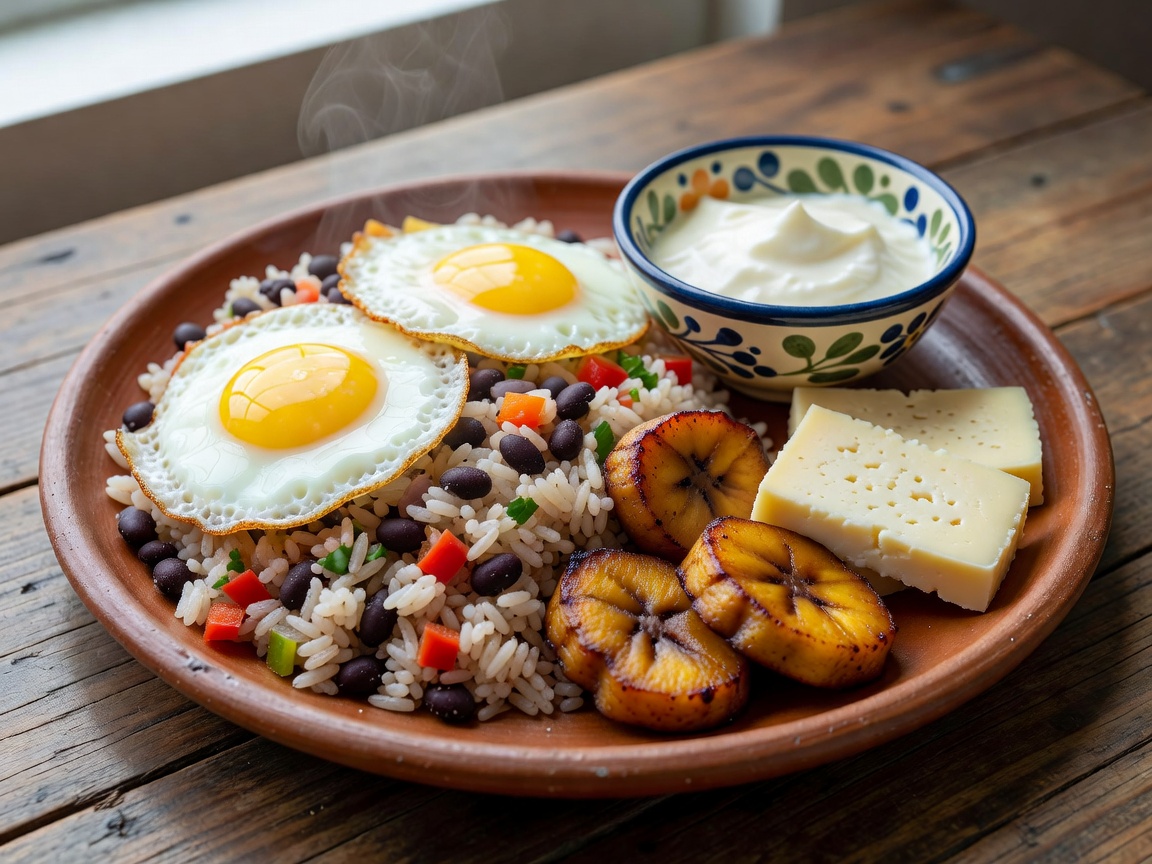
In Costa Rica, Gallo Pinto (literally "spotted rooster") is far more than a meal—it is a national cultural identity. Named for the mottled appearance created when seasoned white rice is tossed vigorously with cooked black beans and their rich cooking broth, it has fueled agricultural workers, coffee farmers, and city dwellers across generations.
The Crucial Role of Salsa Lizano
What differentiates authentic Costa Rican Gallo Pinto from all other Latin American rice-and-beans preparations is Salsa Lizano. Invented in Alajuela in 1920, this smooth, amber vegetable-and-spice condiment blends cumin, mustard seed, turmeric, celery, and molasses. It provides the distinctive herbaceous aroma and savory umami backbone that defines the dish.
The Complete Desayuno Típico Plate
- Plátanos Maduros: Ripe plantains sliced on the bias and fried in oil until caramelizing along the edges, providing sweet balance to the savory beans.
- Queso Turrialba / Queso Frito: Fresh, mild, squeaky semi-hard cheese from the slopes of the Turrialba volcano, served fresh or pan-seared until a golden skin forms.
- Natilla: Light, slightly sour Costa Rican table cream spooned over the hot rice.
- Huevos al Gusto: Fresh farm eggs, typically scrambled with diced sweet peppers or sunny side up.
- Warm Corn Tortillas: Hand-pressed thick tortillas keeping warm inside a cloth napkin.
☕ Café Chorreado Ritual
Costa Rican breakfast coffee is brewed using a Chorreador—a rustic wooden stand holding a reusable cloth filter sock (bolsa). Water heated just below boiling point is poured manually over high-altitude strictly hard bean (SHB) Tarrazú grounds, delivering a bright, clean, floral cup.