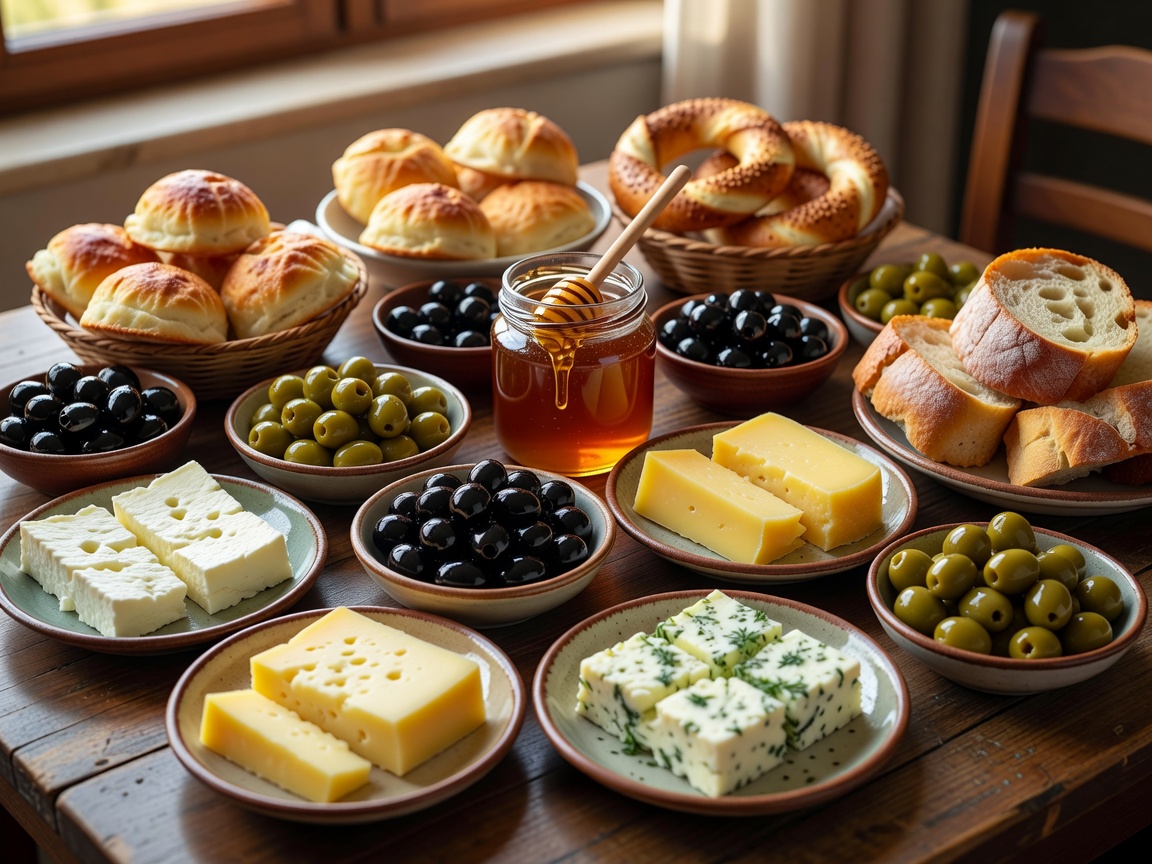
The Etymology of "Kahvaltı"
The term Kahvaltı translates directly to "under-coffee" or "before-coffee" (kahve-altı). Originating during the Ottoman Empire, the meal served as the vital foundation to protect the stomach before drinking potent, un-filtered Turkish coffee. Over centuries, this practical pretext blossomed into one of the world's most intricate morning spreads.
Essential Components of an Authentic Spread
A true regional Kahvaltı consists of anywhere from 12 to 30 individual small ceramic dishes (mezeler) centered on table-wide sharing:
- The Cheeses (Peynirler): Beyaz Peynir (aged sheep or cow feta from Ezine), Kaşar (firm aged yellow cheese), and braided Dil peyniri.
- The Olives (Zeytinler): Salt-cured Gemlik black olives and wild thyme-marinated green olives tossed in cold-pressed Aegean olive oil.
- The Warm Centerpiece (Menemen): Silky scrambled eggs cooked gently with diced green Sivri peppers, vine-ripened tomatoes, and dried oregano in a double-handled copper pan (sahan).
- The Sweet Sweet Counterpoint (Bal & Kaymak): Thick water-buffalo clotted cream (kaymak) drizzled generously with mountain wildflower honey.
- Breads: Freshly baked, molasses-dipped sesame rings (Simit) alongside pillowy sourdough flatbreads (Pide).
Preparation Blueprint: Authentic Menemen
To cook Menemen accurately, heat 2 tablespoons of unsalted butter and 1 tablespoon of olive oil in a skillet. Sauté 2 finely chopped sweet green peppers until softened. Add 3 peeled, finely grated ripe tomatoes with a pinch of sea salt and red Aleppo pepper flakes. Simmer until the sauce thickens into a glossy paste. Crack in 3 fresh eggs and gently swirl the whites through the sauce using a fork, leaving the yolks partially intact for dipping.
External Scholarly Sources & Verification
For deeper historical research into Ottoman imperial dining records, visit the UNESCO Intangible Cultural Heritage Database.