Origins and Indigenous Roots
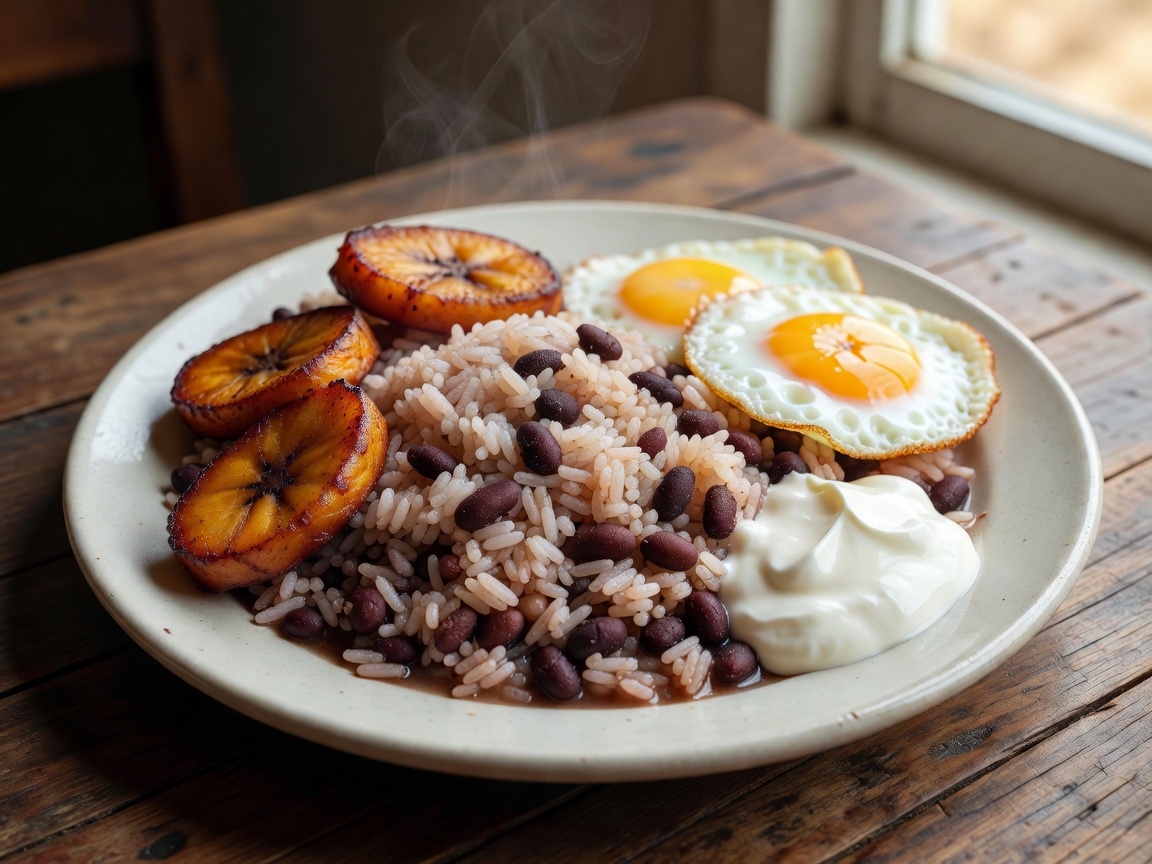
Gallo Pinto emerged as an ingenious culinary solution in the Central Valley and Caribbean coast of Costa Rica to utilize leftover long-grain rice and simmered black beans from the previous evening. By reheating the ingredients together in a skillet with sautéed alliums, sweet bell peppers, and culantro (spiny coriander), the starches and savory bean liquor fuse into a distinctive mottled pattern.
The Complete Breakfast Accompaniments (El Desayuno Típico)
A full traditional breakfast plate includes five complementary elements alongside the central Gallo Pinto mound:
- Huevos al Gusto: Two eggs, either fried sunny side up (fritos) with runny yolks or scrambled with fresh scallions (revueltos).
- Plátanos Maduros: Ripe sweet plantains sliced into coins and fried in oil until caramelized and sticky around the edges.
- Queso Turrialba: Fresh semi-soft cow's milk cheese from the Turrialba volcanic region, lightly pan-seared.
- Natilla: A dollop of light, slightly salted Costa Rican sour cream for dipping.
- Corn Tortillas: Thick, warm handmade corn tortillas kept warm in a cloth napkin.
The Pour-Over Chorreador Coffee Tradition
Costa Rican breakfast is invariably paired with fresh Tarrazú or Valle Central high-altitude Arabica coffee brewed through a traditional wooden stand called a Chorreador, fitted with a reusable cotton filter sock (bolsita) that extracts pure aromatic clarity.
External References
Learn more about regional Costa Rican coffee cultivars through the Instituto del Café de Costa Rica (ICAFE).