The Chemistry of Idli Fermentation
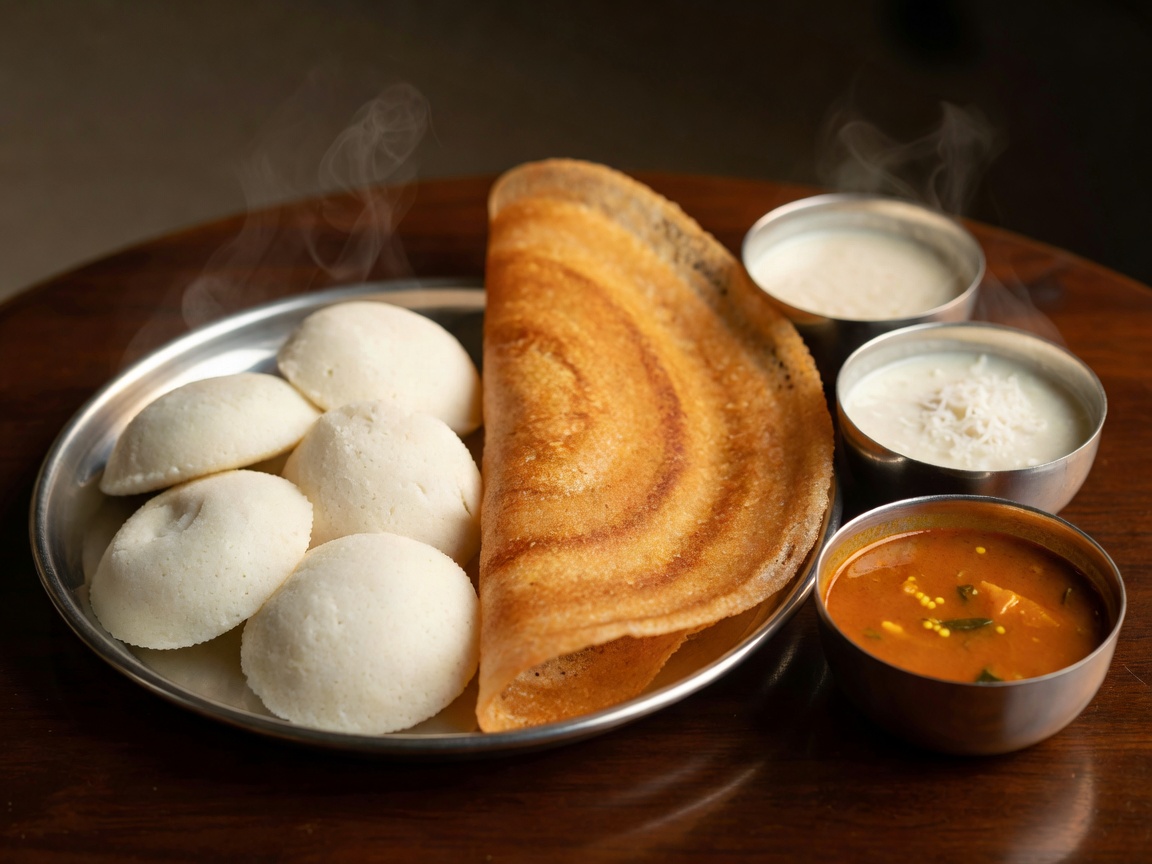
The hallmark of South Indian breakfast is the overnight natural fermentation of short-grain parboiled rice (idli pulungal arisi) and skinless black gram lentils (urad dal). Ground into a smooth batter, wild lactic acid bacteria and airborne yeasts develop over 10–14 hours in ambient warmth, creating tiny gas pockets without requiring baker's yeast or baking soda.
Essential Pillars of the Tiffin Plate
- Malli Idli: Featherlight steamed cakes that melt on the tongue, serving as the neutral sponge for zesty gravies.
- Medu Vada: Savory spiced doughnut-shaped fritters made from stone-ground urad dal paste studded with cracked black pepper, curry leaves, and ginger, fried to a brittle crunch.
- Sambar: A piping-hot lentil stew cooked with toor dal, drumsticks (moringa pods), pearl onions, shallots, and a hand-pounded spice blend of roasted coriander seeds, fenugreek, and dry red chillies.
- Thengai Chutney: Raw coconut flesh ground with green chillies, roasted split chickpeas (chana dal), and tempered with mustard seeds sizzling in coconut oil.
The Iconic Filter Kaapi Pour
No South Indian tiffin is concluded without Filter Coffee. Dark roasted chicory-infused coffee decoction is extracted through a perforated brass drip cylinder, blended with boiling whole buffalo milk and unrefined cane sugar, then frothed by pouring rapidly between a tall metal glass (tumbler) and a wide-lipped bowl (davarah).
External Scholarly Culinary Archives
Consult academic food history at the Food Safety and Standards Authority of India Heritage Compendium.